Items tagged with astronomy

Some nighttime sky watchers will be privy to seeing a lunar occultation tonight, as the Moon passes in front of Mars. While the viewing of the occultation will be limited, many others will still be able to witness a conjunction or close...
Read more...

Astronomers utilizing the Giant Metrewave Radio Telescope (GMRT) in India, have detected a signal with a lookback time of a phenomenal 8.8 billion years. The radio signal originated from the most distant galaxy so far at a specific...
Read more...

New research indicates that something is awry within the Butterfly Nebula, also known as NGC 6302. A team of astronomers at the University of Washington found "dramatic changes in the material within the wings," after comparing two...
Read more...
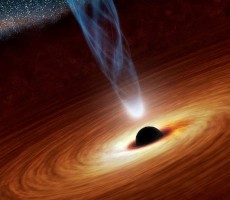
A team of scientists has unveiled the secret to a burping black hole with the Green Bank Telescope (GBT). The new study reveals new information about mysterious radio bubbles surrounding a supermassive black hole.
Supermassive black...
Read more...

Skywatchers will be able to view all the planets in our Solar System on the same night. Those wanting to get an early sneak peek can join a live broadcast by The Virtual Telescope Project 2.0 later today.
December has been chock full of...
Read more...

A team of astronomers has detected evidence that two exoplanets 218 light-years from Earth are "water worlds." The two planets orbit a red dwarf star in the constellation Lyra, unlike any planets in our solar system.
According to a...
Read more...

NASA's James Webb Space Telescope (JWST) captured a stunning image of one of the first medium-deep wide-field images of the cosmos, including a region of the sky known as the North Ecliptic Pole. The image is part of the Prime...
Read more...

An international team of researchers is calling a stunning fireball from the most distant region of the Solar System a game changer. The meteor that was spotted over Alberta, Canada last year is challenging the currently favored Solar...
Read more...

In order to celebrate the release of it's asteroid toolkit, the European Space Agency (ESA) has issued a challenge to find a mystery asteroid. The Christmas asteroid poses no threat to Earth, but the agency says it does not know much about...
Read more...

The cosmos' holiday gift of the Geminid meteor shower is upon us, with its peak on December 14, 2022. During the peak, skywatchers can hopefully expect 30-40 meteors per hour in the Northern Hemisphere, and up to 150 if one is lucky enough...
Read more...

NASA's James Webb Space Telescope (JWST) has reached yet another milestone, as it has discovered the earliest galaxies confirmed to date. The galaxies that were unveiled date back to less than 400 million years after the big bang.
The...
Read more...

A group of astronomers sorted through 200,000 images from NASA's Hubble Space Telescope in order to look for any residual background glow in the sky. The highly-ambitious project called SKYSURF, found an extremely small amount of excess...
Read more...

A team of astrophysicists has upended a long-held belief that long gamma-ray bursts (GRBs) only resulted from the collapse of massive stars. A new study, led by Northwestern University, presents new evidence indicating at least some long...
Read more...

A team of researchers at the University of Alberta has found two minerals never before seen on Earth in a slice of a 15-ton meteorite. The slice came from the ninth-largest meteorite ever found.
Skywatchers love watching falling stars...
Read more...

New evidence points to the Andromeda galaxy being a cannibal that has been growing with intermittent feasts of smaller galaxies. An international team of scientists recently published a paper with the findings of two honor students.
A...
Read more...

A new map has been created which allows users to investigate the entire observable universe with pinpoint accuracy for the first time ever. The gorgeous compilation was pieced together using data from the Sloan Digital Sky Survey by...
Read more...

A NASA-funded team has created a new model that explains the scarcity of planets with masses between super-Earths and mini-Neptunes. The new model aims to explain two puzzling observations that continually appear among the more than 3,800...
Read more...
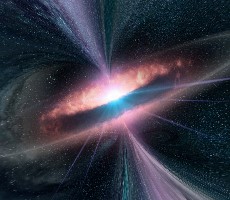
An intermediate-mass black hole was recently discovered devouring an unsuspecting star that got a bit too close, producing a flair of radiation that outshined even the combined stellar light of the host dwarf galaxy. The destruction of the...
Read more...

The Moon will be entering the Earth's shadow this month, creating a spectacular total lunar eclipse, called a "Blood Moon." If you miss catching this event while it's happening live, it will be another three years before another total...
Read more...

An international team has identified a very large atomic gas structure which spans nearly 2 million light-years in a region around a famous quintet of galaxies. The team used the Five-hundred-meter Aperture Spherical Telescope (FAST)...
Read more...

Sky watchers are in for a treat later this week, as the Orionid meteor shower is expected to provide a fantastic light show in the sky. This particular meteor shower is compliments of perhaps the most famous space rock, Halley's...
Read more...

Scientists have discovered that near-Earth asteroid Phaethon has a measured change in its rotation period. Phaethon is just the 11th asteroid to be found with this unique feature, and its the largest of the group.
NASA's DART mission...
Read more...