Items tagged with astronomy

Researchers have created a map of the Milky Way's ancient dead past, revealing the resting place of stars that have since passed away. In fact, the study unveiled a massive eerie graveyard that stretches three times the height of our own...
Read more...

A team of researchers have created the first ever computer generated 3D model of the Cat's Eye Nebula, and it is simply purrrfect. The new image also reveals a pair of symmetric rings that encircle the nebula's outer shell.
The Cat's...
Read more...

9/26/2022 Update
As a reminder, Jupiter's closest pass to Earth is tonight, so don't miss the opportunity to see it! It is a busy night for space as the NASA DART mission is reaching its conclusion this evening as well. Original story...
Read more...
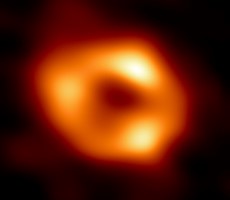
New research seems to indicate a giant gas bubble is circling the Milky Way's supermassive black hole. Astronomers believe the hot bubble of gas is about the size of the planet Mercury, and makes a full lap around the black hole in just 70...
Read more...

The remnants of an exploded white dwarf star are serving as a learning tool for astronomers. The supernova remnant, known as SNR 0519-69.0 (SNR 0519 for short) is the result of debris from a white dwarf star explosion.
It is believed...
Read more...

The Hubble Space Telescope continues to capture dazzling images from space, as it catches an intimate cosmic dance of two intertwined spiral galaxies. The two galaxies are located more than a billion light-years from Earth.
The European...
Read more...

People around the world were privy to a gorgeous Harvest Moon over the weekend. Unlike other full moons, the Harvest full Moon rises into the night sky around the same time for several evenings in a row.
The Moon has been in the...
Read more...

An international team of researchers have discovered two super-Earth exoplanets, and one of them may be habitable. One of the planets is located at a distance from its star which potentially means it could hold liquid water on its...
Read more...

Astronomers Track A Wobbly Star To A Perplexing Jupiter-Like Planet Holding Keys To How Planets Form
Astronomers were able to detect a Jupiter sized exoplanet by tracing a nearly indistinguishable wobble of the star it orbits. By using the Very Long Baseline Array (VLBA), astronomers produced the first-ever 3 dimensional structure of the...
Read more...

A European Space Agency (ESA) Hubble telescope picture of the week captures a magnificent view of a dwarf irregular galaxy. The image showcases galactic marvel NGC 1156.
NGC 1156 is not like many other galaxies known to Hubble. While...
Read more...

This weekend will provide avid astronomers with a parade of asteroids zipping past Earth. In fact, there will be a total of five airplane-sized asteroids joining the procession between Saturday and Monday.
Just last month, a bus-sized...
Read more...

Astronomers may have discovered the youngest planet ever found in our galaxy. The planet is thought to be orbiting AS 209, a young star in the Ophiuchus constellation estimated to be just about 1.6 million years young.
Research recently...
Read more...

2022’s final supermoon is bringing some pizazz as it coincides with the Perseids meteor showers this Thursday. August’s so-called sturgeon full moon will reach its peak at 9:36 p.m. Eastern on the 11th.
Supermoons are not perfectly...
Read more...

A duo of young researchers have detected a "one of a kind" system of three stars, with the tertiary star that is thought to be sixteen times the mass of our own Sun. The system of stars is so bright, that when first found it was thought to...
Read more...

A group of volunteers with Galaxy Zoo have been scouring data, using machine learning and an AI assistant, named Zoobot, to locate an unprecedented number of ring galaxies. The cyborg approach has been able to identify 40,000 ring galaxies...
Read more...

Comet C/2017 K2 will be at its closest orbital point to Earth later today, and you can watch the cosmic flyby live. The comet was first spotted by astronomers in 2017 and should be visible via a small telescope throughout the...
Read more...

NASA's Hubble Space Telescope has captured a white dwarf star that is cannibalizing debris from the system's inner and outer reaches. It is the first time researchers have found a white dwarf star that is feeding off both rocky-metallic...
Read more...

NASA's Chandra X-ray Observatory captured images of a speeding pulsar in the midst of an exploded star. The pulsar is estimated to be traveling at a speed of well over 1 million miles per hour (MPH).
The stellar speedster captured by...
Read more...

The world's most powerful supercomputer dedicated to astronomy simulations was recently used to simulate the formation of a cluster of baby stars. Astronomers at the National Astronomical Observatory of Japan (NAOJ) developed the new code...
Read more...
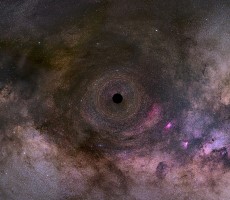
NASA's Hubble Space Telescope continues to deliver, by providing the first direct evidence of a lone black hole in interstellar space. Up until now, all black hole masses have been "inferred statistically", through interactions in binary...
Read more...

NASA's Hubble Space Telescope continues to capture images ahead of the launch of the James Webb Space Telescope (JWST). The 3D-Dash program is a high resolution survey that will allow researchers to locate rare objects and targets for JWST...
Read more...

While Neptune and Uranus are similar in many ways, new observations have revealed why Uranus might be the paler of the two. The new research suggests the reason for the difference in color lies in a haze that exists on both planets and is...
Read more...